
Dental Implant Restorations
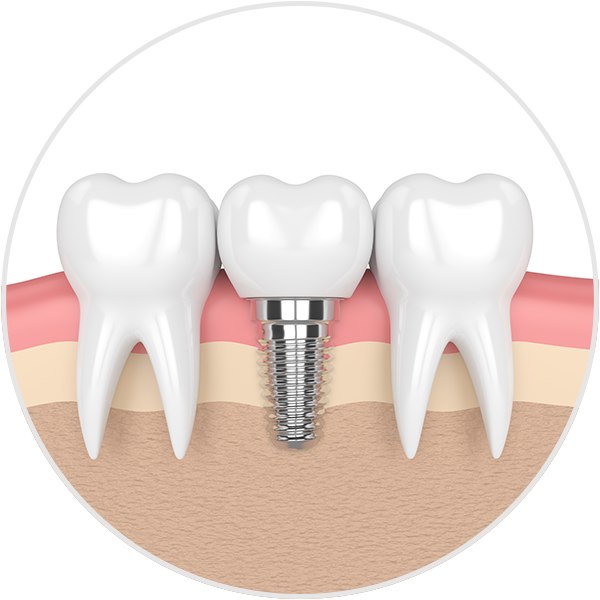
Dental implants are designed to provide a foundation for replacement teeth that look, feel, and function like natural teeth. The person who has lost teeth regains the ability to eat virtually anything and can smile with confidence, knowing that teeth appear natural and that facial contours will be preserved. The implants are tiny titanium posts that are placed into the jawbone where teeth are missing. The bone bonds with the titanium, creating a strong foundation for artificial teeth. In addition, dental implants can help preserve facial structure, preventing the bone deterioration that occurs when teeth are missing.
Dental implants are changing the way people live! With them, people are rediscovering the comfort and confidence to eat, speak, laugh, and enjoy life.
Evaluation for Dental Implants
If, like many others, you feel implant dentistry is the choice for you, we ask that you undergo a dental/radiographic examination and health history. During these consultation visits, your specific needs and considerations will be addressed by either Dr. Martin or by an Oral and Maxillofacial Surgeon referred by our practice. Your questions and concerns are important to us and our team will work closely with you and the oral surgeon to ensure your dental implant procedure is successful.
Dental Implant Procedure
Dental implants are metal anchors that act as tooth root substitutes. They are surgically placed into the jawbone. Small posts called abutments are then attached to the implant, which protrude through the gums. These posts provide stable anchors for artificial replacement teeth. Getting dental implants is a collaboration between an oral surgeon who places the implants in your jawbone and Dr. Martin, who designs and attaches customized dental restorations such as crowns, bridges, or permanent, full-arch replacement teeth, to the implants.
For most patients, dental implant placement involves two surgical procedures. First, dental implants are surgically placed in the jawbone by an oral surgeon. For the first three to six months following surgery, the implants are beneath the surface of the gums, gradually bonding with the surrounding bone. You should be able to wear temporary dentures and eat a soft diet during this time.
Dental Restoration
After the dental implant has bonded to the jawbone, the second phase begins. The surgeon will uncover the implants and attach a small healing collar. Dr. Martin can then start making your new teeth. An impression of the mouth must be taken. We use the impressions to design and fabricate the final, customized restorations. These are then attached to the implants using the abutments. The entire procedure usually takes six to eight months. Most patients do not experience any disruption in their daily lives.
Frequently Asked Questions About Dental Implant Restorations
What is a dental implant restoration?
A dental implant restoration is the replacement tooth or teeth attached to a dental implant to restore the appearance and function of your smile. Depending on your needs, the restoration may be a crown, bridge, or denture supported by dental implants. These restorations are designed to look natural and help you chew and speak comfortably.
How long does it take to complete a dental implant restoration?
The timeline varies depending on your oral health, the type of restoration, and how long the implant needs to heal and integrate with the jawbone. In many cases, several months are needed before the final restoration can be attached. Your dentist will explain the expected timeline based on your treatment plan.
Do dental implant restorations look like natural teeth?
Yes. Dental implant restorations are custom-designed to complement the color, shape, and size of your surrounding teeth. With careful planning, they can blend naturally with your smile while restoring function.
How do I care for my dental implant restoration?
Brush twice daily, clean between your teeth and around the implant, and attend regular dental checkups. Although implant restorations cannot develop cavities like natural teeth, the surrounding gums and bone still need proper care to help prevent inflammation and maintain long-term health.
How long do dental implant restorations last?
The lifespan depends on the type of restoration, your oral hygiene, bite forces, and other individual factors. With proper care and regular dental visits, implant restorations can last for many years, although the crown or other attached components may eventually need repair or replacement.